ipelektro@upsplusz.hu
 (+36) 20-959-8855
Hírek
Line-interactive or online UPS: what is the difference?
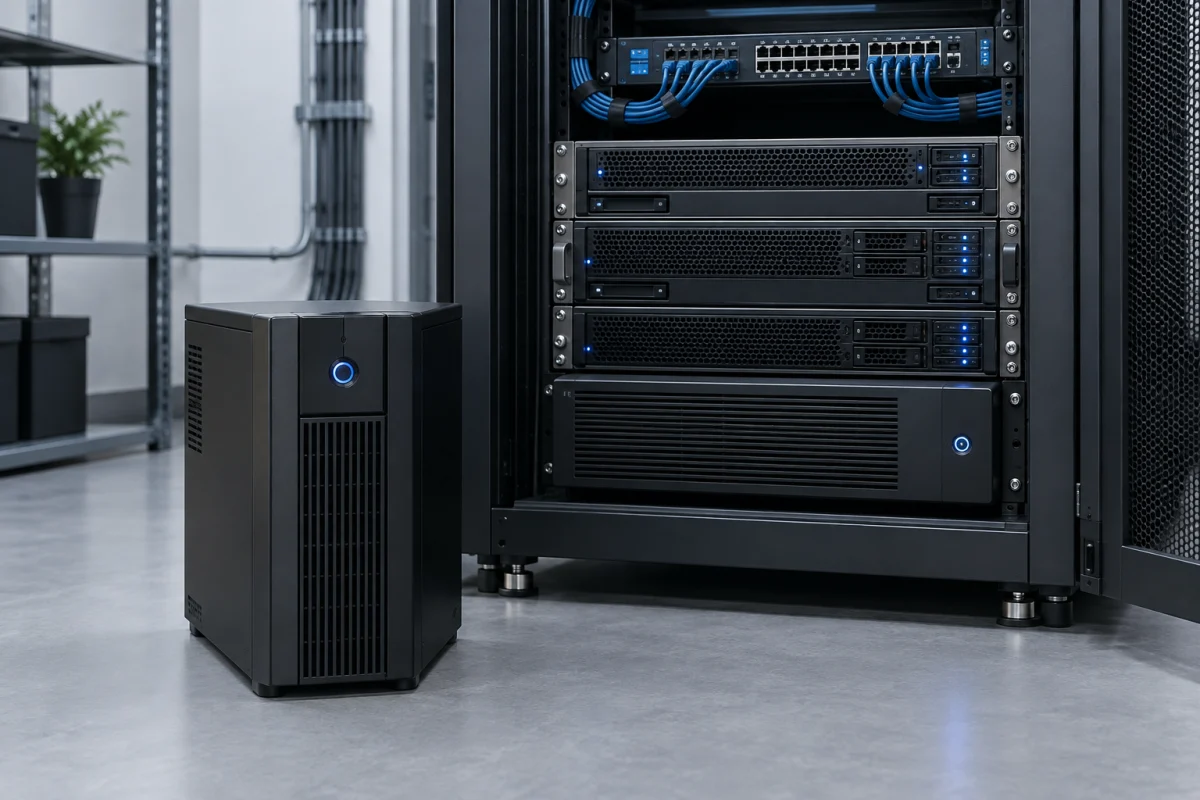
When choosing a UPS, topology matters as well as power capacity. Line-interactive and online double-conversion systems handle mains power differently. Consider the protected equipment, operating environment and availability requirements together.
How does a line-interactive UPS work?
A line-interactive UPS normally uses mains power. Automatic voltage regulation corrects certain voltage fluctuations without using the battery. During an outage it switches to battery operation; transfer time is generally short but not zero. Check the exact model's datasheet.
What does online double conversion mean?
In double-conversion operation, incoming AC power is converted to DC and then back to AC. The inverter supplies the load, so a mains failure does not create the battery-transfer gap associated with line-interactive operation. ECO and bypass modes must be assessed separately.
Eaton: UPS topologies and fundamentals
Four questions to guide your choice
What equipment will the UPS protect? What interruption can your operation tolerate? Where will the unit be installed? Who will monitor it? These answers help define a useful enquiry. A reception computer and a dedicated server room may have very different requirements.
Create a short comparison table for shortlisted models: rated W/VA, expected load, manufacturer runtime, output waveform, outlets, communication and installation requirements. Add your mandatory requirements alongside them. This helps reveal when a lower-priced option omits a feature you need.
Compare specific models before deciding
The topology name alone does not establish compatibility. Send a list of the equipment and intended use so the selection can match your system. When replacing an existing UPS, include its model and a description of the problem you are trying to solve.
Request a technical consultation
Featured image: AI-generated illustration; it does not show a specific product model.